
Patina is just Time made Visible
- 3 days ago
- 4 min read
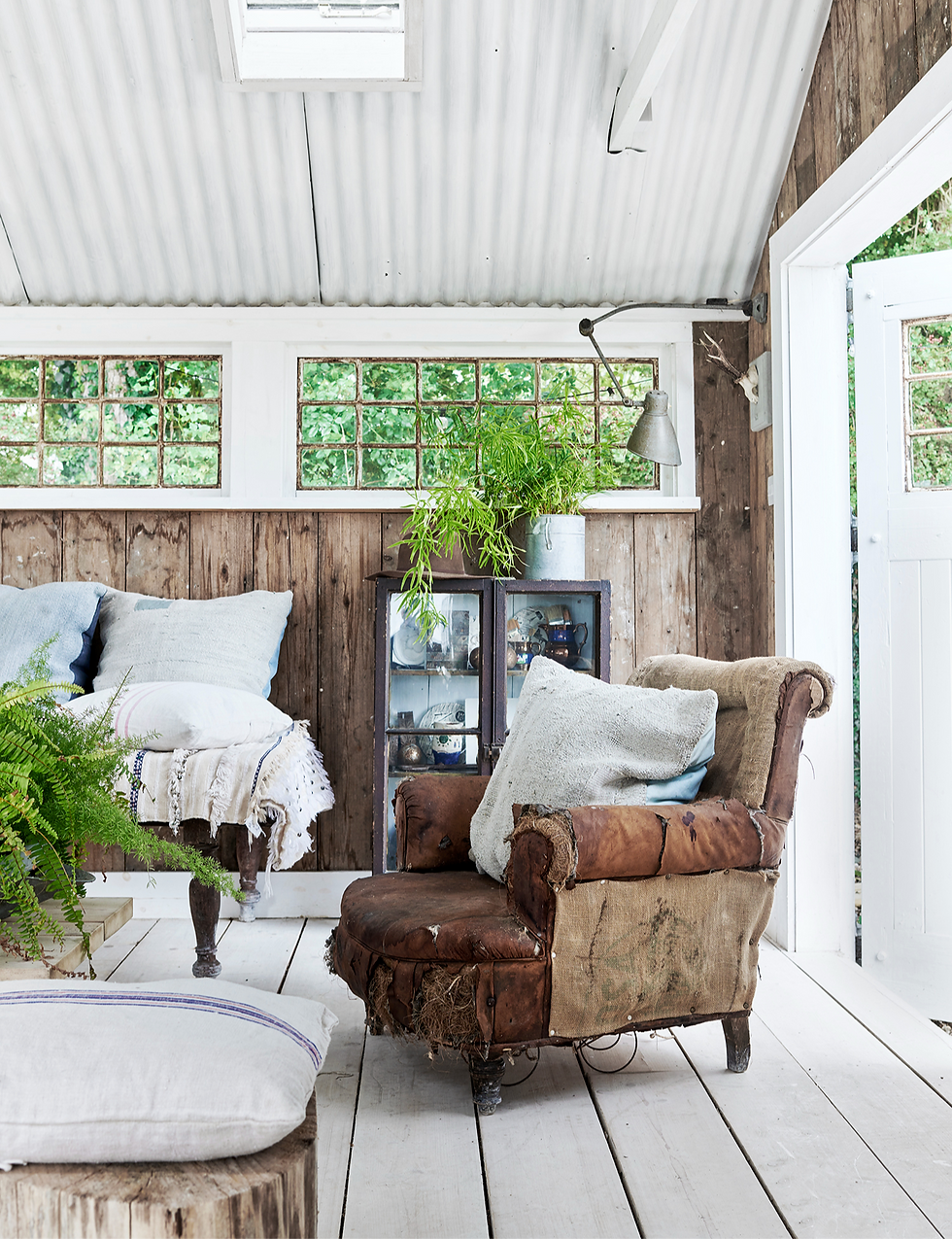
There’s something I keep coming back to when I think about the rooms that have stayed with me over the years. The ones that felt genuinely soothing rather than simply well put together. The ones where something in you just… exhaled.
Those are always the rooms I remember.
And they almost always had materials with a past.
Not always obviously. Not always dramatically reclaimed or salvaged in any conspicuous way. But there was usually something — a floor that had been walked on for a hundred years, a piece of wood with a grain that told its own story, stone that had weathered, plaster that wasn’t quite smooth. Something that carried time in it.
I’ve been thinking about why that matters so much. Because I think it goes deeper than aesthetics.
There’s an environmental argument for reclaimed materials, and it’s a good one. Choosing something that already exists — that has already been made, already been used, already given its energy to another life — is simply a more careful way to build. It sits more lightly on the world. And there’s a real quality that it brings to a home, something I can only describe as ease. A guilt-free quality. The sense that your home isn’t costing the planet something it can’t afford.
But what interests me just as much is what happens beyond that argument. What reclaimed materials do to the feeling of a room that no amount of good taste or careful decoration can replicate.
They bring time in.
And time, I’ve come to believe, is one of the most underrated ingredients in a calm home.
Perhaps that’s because our lives are already shaped by different rhythms of time, even if we don’t always think about it. Gardening makes this very clear. You plant bulbs in autumn knowing you won’t see the result for months. And then there are the fleeting pleasures — the blossom on a favourite tree that appears for a few short weeks each spring but somehow colours the whole year with anticipation.
Those different gauges of time — the long patience and the brief, luminous moments — give life depth.
I sometimes think that’s also why I’m drawn to the past. To period novels and dramas, to museums and old houses where everyday life has been quietly preserved. There’s something strangely comforting about being reminded that people centuries ago were moving through their days much as we do now — cooking, writing letters, worrying about things, going about the ordinary business of living.
And perhaps that sense of continuity is part of what reclaimed materials bring with them.
New things — however beautiful — exist only in the present. They’re waiting to become something. Waiting to earn their place. There’s nothing wrong with that, but there’s a particular quality they don’t yet have. A surety, a strength even. A sense of having already been through something and come out the other side intact.
A reclaimed beam has that. An old stone floor has it. A piece of timber that was part of a barn or a workshop or someone else’s home for a century before it arrived in yours — it brings all of that with it. Not in any mystical sense, necessarily. But in a very real, material sense. In the grain of it. The wear of it. The way it sits differently in a room than something that came off a production line last month.
And often those older materials were made by hand. Shaped, cut, laid or carved by someone whose working day might have looked very different from ours, but whose attention and care are still there in the thing itself.
I sometimes think that’s part of what we’re responding to as well. Not just the time, but the human presence within it. The quiet evidence that another pair of hands once measured this beam, laid this stone, planed this piece of timber.
In a small way it brings that person forward into the present. Their work continues to exist in the room with you.
And perhaps that, too, adds a kind of emotional depth that brand new materials rarely carry yet.
Patina is just time made visible.
That’s all it is.
And rooms that have it — or borrow it from the things inside them — tend to have a quality that I find is almost impossible to manufacture from scratch.
They feel inhabited rather than decorated. Grounded rather than styled. Like the space has a memory, even if you can’t quite say what it remembers.
I think this is part of why so many people feel vaguely unsatisfied with interiors that are technically perfect. Everything is right. Everything is beautiful, even. But something is missing.
The room feels a little thin. A little now.
There’s no depth of time in it, no suggestion that it has existed through anything, that it will continue to exist long after the current trend has passed.
When I’m working on a space — or thinking about my own — I find myself asking where the time is coming from.
Where is the history in this room?
What is carrying the sense that life has been lived here, or that it will be?
Sometimes it’s a structural element. Sometimes it’s something smaller — a piece of furniture, a floor, a surface, even a piece of china. But I’ve learned to look for it, because rooms that don’t have it can feel strangely lifeless. Like they’re waiting for something.
The rooms that soothe us, I think, are the ones that feel as though they’ve already arrived.
As though they have nothing to prove and nowhere to be.
Reclaimed materials have that quality built into them already, gifted to them by whoever lived with them before.
You’re not starting from scratch.
You’re continuing something.
And there’s a particular kind of peace in that. |


Comments